Avengers: Endgame and Misunderstanding the Purpose of Criticism

Reading the IMDB user reviews for Avengers: Endgame was an experience that, for me, was equal parts frustrating and odd.  Not odd in the sense that it was unexpected, however.

I should mention that my opinion of the film is overwhelmingly positive (perhaps a 9 out of 10), and the reviews I took issue with many of those negative.  However, it is not the dislike of the film that I take issue with.  Appreciation of art is subjective, and any level of love or disdain is valid.  Considering my own controversial opinions on the likes of A New Hope, The Godfather Part 2, and Spirited Away, it would be out of place for me to claim that Endgame possesses any divine ordinance that makes it immune from negative criticism (not that anyone would have the right to claim as such in the first place).

Rather, my problems with many of the reviews have little to do with Avengers: Endgame in particular, and more to do with what I perceive to be a broad problem in most media criticism.  First, let’s discuss some fundamentals.


What makes a good review?

When I ask this question, I am not talking about technicalities.  Sure, the finer details of writing and communication play a colossal role in determining the quality of criticism, but what I want to focus on here is, to rip off Aristotle, “telos.”  The essential purpose of a review of a work of art is either to communicate to someone whether or not they will enjoy said work or to express a perspective to them which might resonate with them and help them to appreciate it differently.

If one seeks to inform the audience of how much they should expect to enjoy something, they might either write disregarding their own opinion, instead focusing on what their intended audience is likely to care about, or they might write strictly from their own opinion, being as genuine as possible in regard to their experience with the work.  Each approach has merit.

The second approach also has merit when one’s intended audience consists of those who have already experienced the work.  Hearing a genuine and personal take on a piece of art, even a take one might disagree with, can enrich one’s understanding not only of that piece, but of art in general.


Helping No One

When I look at most of the negative reviews of the film, I see a commonality among them, usually focusing on ‘plot-holes’ and ‘messy pacing’ and many of the criticisms of any film one would expect from a 14 year old video essayist.  It’s the type of check-box criticism that comes from attempts at being “objective,” and I expect you know what I’m talking about.

Suppose, as one likely should, that those who would watch and/or enjoy Avengers: Endgame are not the type who go to the movies to pick at technicalities or the finer points of film-making, but for broadly well-constructed writing and weighty catharsis.  Would it then be wise or fruitful to review the film with the approach discussed above?

Suppose it would, for one reason or another, be more fruitful to try to review the film in the most genuine way possible, discussing what you personally found enjoyable or less enjoyable, and why.  Can one really claim to be genuine when one tries so hard to fit their imagined standard of an “objective critic” — sorry, ObJeCtIvE cRiTiC?

Suppose one enters into discussion of the film with those who have seen it and want to evolve their own perspective.  Is your contribution meaningful if you list off a series of soulless and boilerplate criticisms?

You know the answers to these questions, if you’re wise, and you know this is an issue reaching beyond the user reviews of a single movie, if you’re informed.  Think for a moment how important criticism is to art as a whole, and seriously consider what’s being wasted with attempts at check-box-objectivity.  That’s all.

Does Kill la Kill Have “Fan Service”?

Image result for kill la kill fan service

Briefly, no.

“Fan service”, in the context of anime, refers to an intentional display of erotic imagery, with the condition that it is intended primarily for this purpose and that it is a break from the overall intention of the series.

While the imagery of Kill la Kill is often extremely erotic, there are three important reasons why I don’t believe fan service exists in the show.


Reason #1: Overall Aesthetic Intention:

Consider the numerous hot babes in Fairy Tail.  There’s no doubt fan service exists in that show, but what’s important is that the main aesthetic thrust of Fairy Tail is not to be erotic.  Any eroticism in the show is a break from the show’s overall aesthetic intentions.  To understand my point, consider why the suggestive imagery present in Fairy Tail is called “fan service,” while the same in Itadaki Senki is called, well, porn.  Fan service services the fans of something other than the service itself.

You would have to be stupid not to notice Kill la Kill’s immediate intentions not to be anything other than erotic.  In this way it’s comparable to a series like High School DxD.  However, I would argue it is distinct from series of this ilk in two ways, the other two reasons I will discuss.


Reason #2It Isn’t Sexy

While the designs in Kill la Kill are certainly attractive, it’s clear to see that they don’t conform to what would generally be considered arousing.  As opposed to the very anime-like and detailed designs one would see in porn, Kill la Kill instead boasts blobby and cartoonish looks on all of its characters.

In other words, contrary to the all-too-common show in which arousal is sprinkled in to heighten its appeal, Kill la Kill is the exact opposite, a show centered around eroticism that is, in comparison, not made to be arousing.  More on that point…


Reason #3: What the Show’s About

Why is Kill la Kill centered around eroticism?

Simply, as anyone who has seen the show can attest to, Kill la Kill is a show about nudity.  Not only does it thematically comment on nudity and clothing alike, but uses these symbols as a vessel for exploration of its extremely varied pool of philosophical content.

It seems a bit strange to nudity (partial nudity, in this case) in a show about nudity to be “fan service.”  In the same way nothing Kill la Kill does is a break from its aesthetic intentions, nothing is a break from its narrative intentions either.

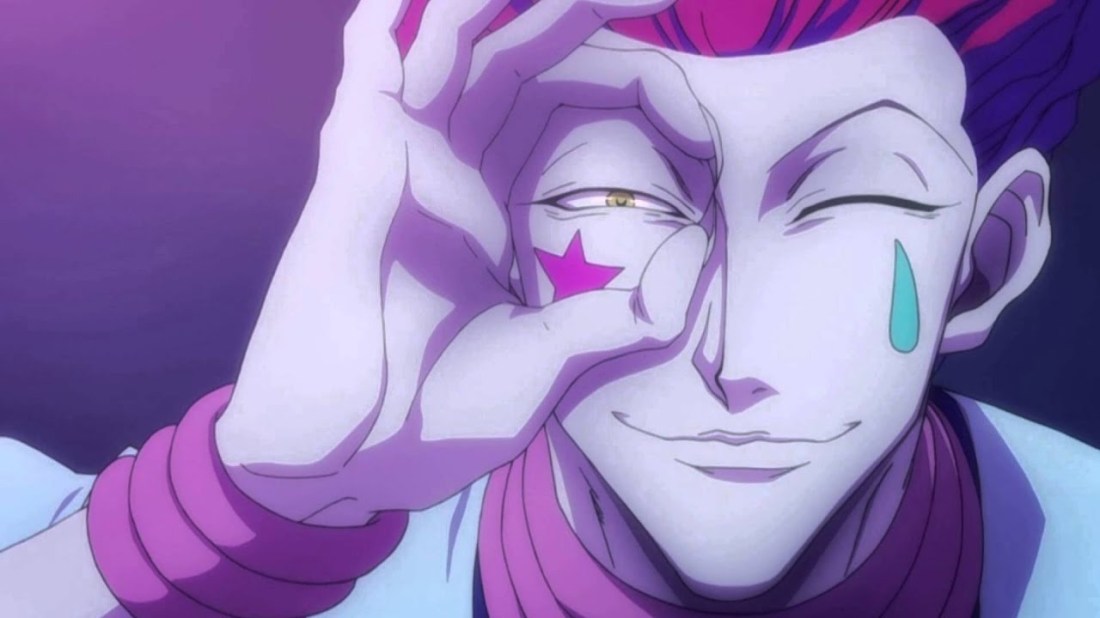
Hisoka: A Great Chimera Ant Character

Hisoka had always been the character that loomed smiling in the background of every event within Hunter x Hunter.

So, of course, his presence is felt even in the notorious and brilliant Chimera Ant Arc.

This thesis may seem strange to readers of Hunter x Hunter or watchers of the adaptation that matters; after all, Hisoka never once makes an appearance in Chimera Ant.  But that doesn’t mean his character isn’t there.

What do I mean by this?

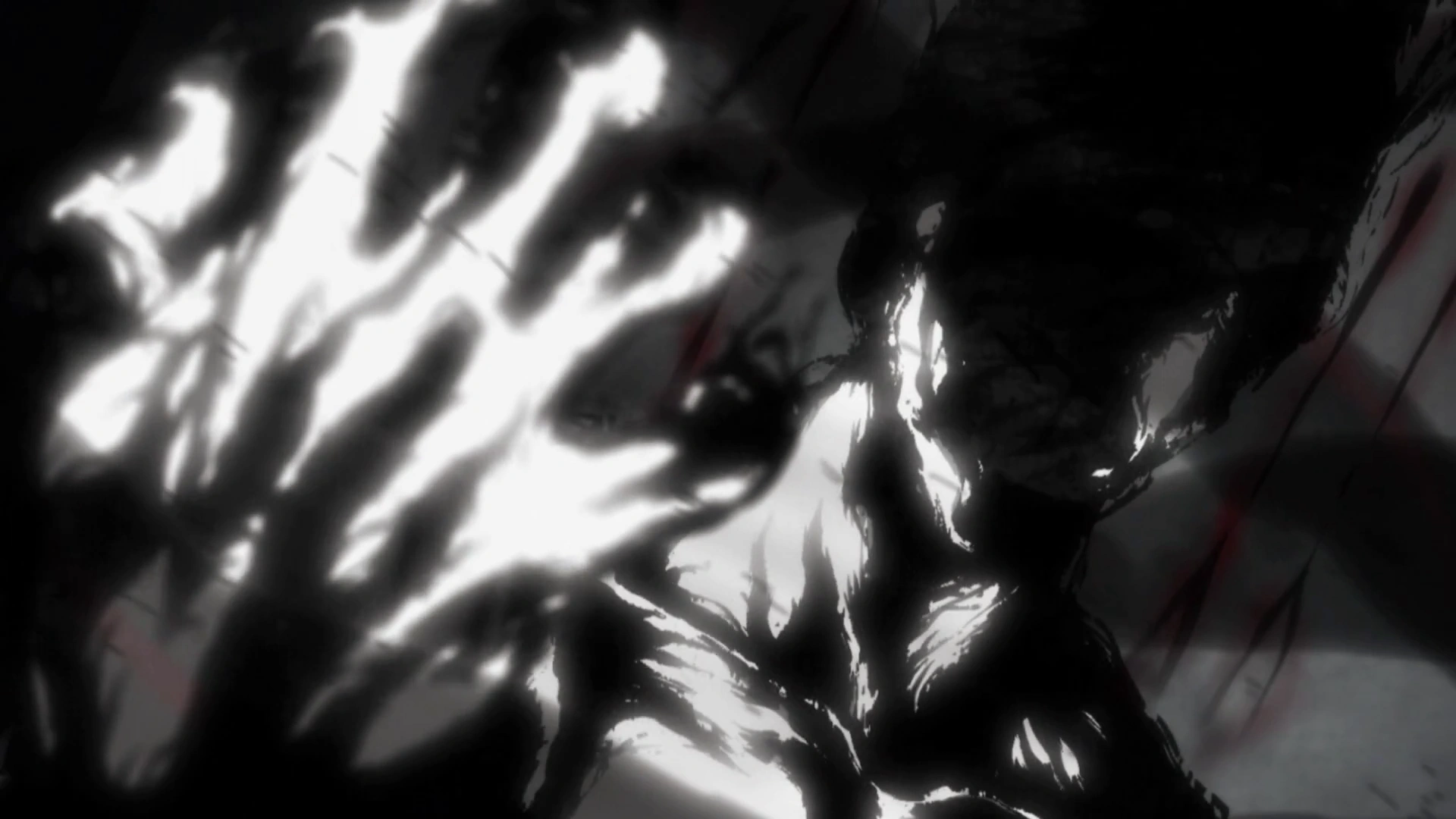
Image result for gon transformation

The main characters having unusual “potential” and maturing in their capabilities over time is a common, if not universal, staple of shounen manga and anime.

So too is it in Hunter x Hunter.

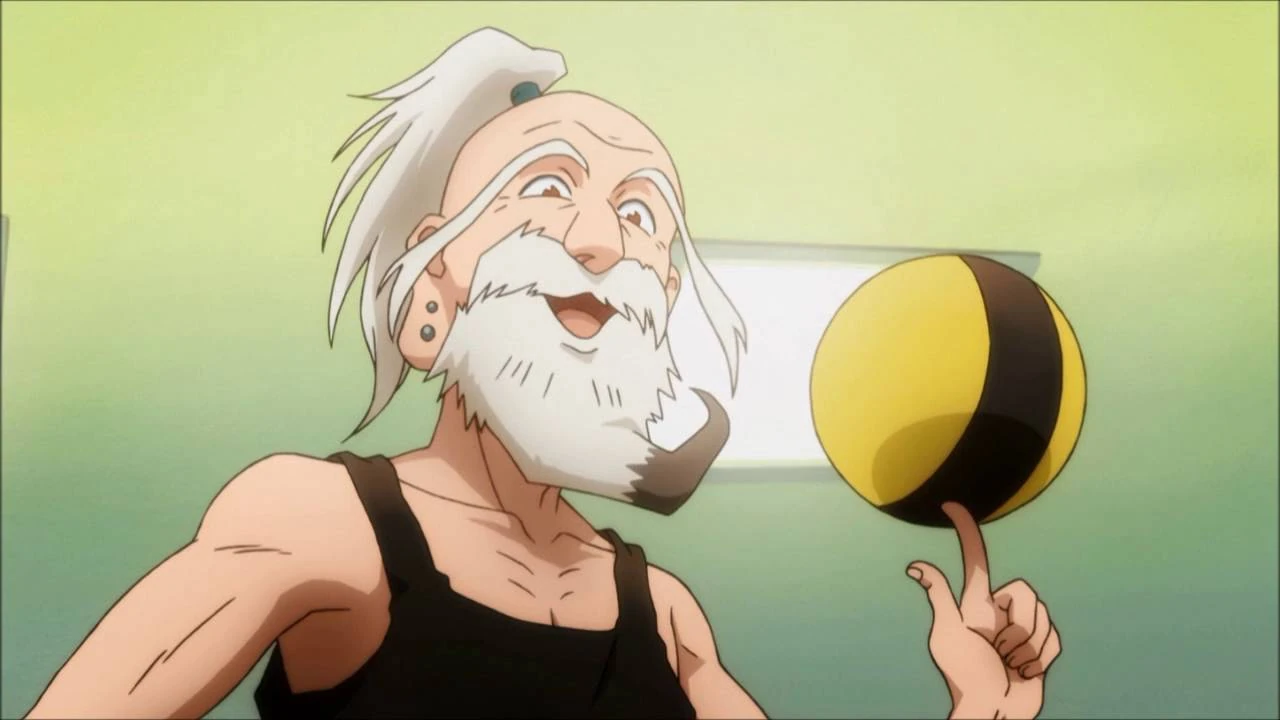
So often in Hunter x Hunter one character or another will notice or even marvel over the potential for growth present in Gon and/or Killua.  Remember Netero’s ball game?  Remember Bisky’s training?

Image result for netero ball game

Hunter x Hunter, however, is one of only a select few series to take the approach it does to the main guy’s growth.

Upon reading the Chimera Ant Arc (in other words, my second experience of the story), I couldn’t help but notice the strange growth in Gon’s power.  For the majority of Hunter x Hunter so far, it’s been emphasized just how weak Gon and Killua are.  It’s fun to watch them stomp the noobs in Heaven’s Arena, but as soon as they meet Hisoka, all bets are off.

Consider the Phantom Troupe, the Zoldycks, Hisoka, or Genthru.  All of them are far more powerful than our dynamic duo.  No doubt about it, Gon and Killua are weak, and always have been.  Hell, Gon even cries about it in Chimera Ant (yet another example of attention to thematic detail on the part of Togashi).

Yet when we enter Chimera Ant, Gon is able to impress and even frighten multiple characters who ought to be far more powerful than he.  The first is Morel.

The second is Pitou.

Both instances have something in common: Gon is consumed by hatred and rage.  Now, I’m not going to analyze in detail the way Gon’s growth in power culminates and adds to the story thematically, because frankly, that’s been done to death.  But I will say that after so much mention of Gon’s potential in the series, the Chimera Ant Arc felt like the first time that bottomless well was truly being tapped.  His growth was bearing real fruit.  He was, ahem, ripening.

Image result for schwing hisoka

And, as anyone who’s seen the Chimera Ant Arc would understand, God damn I wish it hadn’t.

Point being, when I see the adult Gon growing to the second most powerful character in the anime and beating the third to a pulp, I can’t help but imagine the most fervent believer in Gon’s potential giggling with glee.